
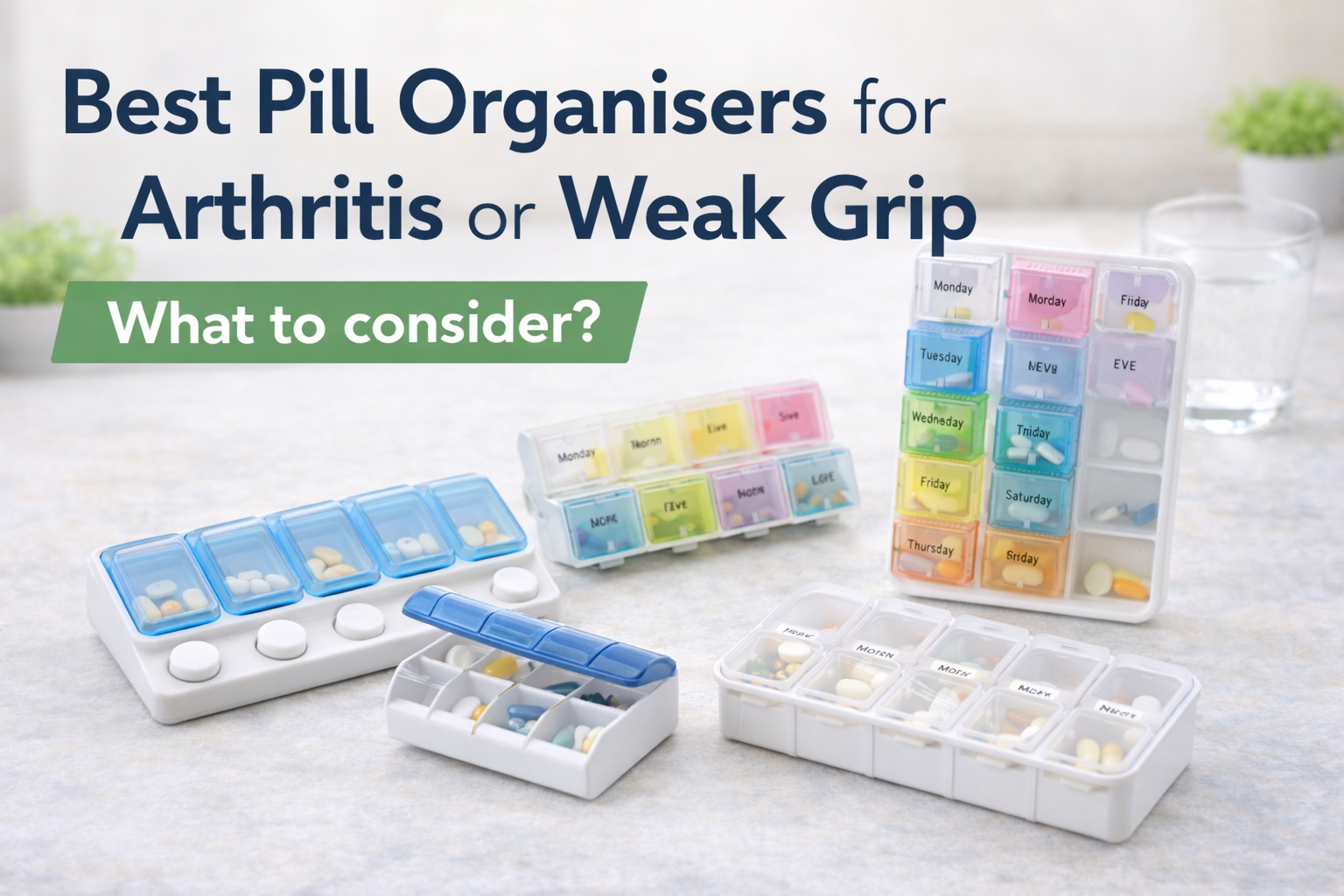
Opening packaging, handling small objects, and applying pressure can become challenging when arthritis or reduced hand strength is involved. For people managing medication at home, this can turn what should be a simple routine into a source of frustration or risk.
Pill organisers designed for arthritis or weak grip aim to make daily medication routines easier and more reliable. This guide explains the types commonly used, what features many people look for, and how they fit into wider medication routines at home.
This article is for general information only and does not provide medical advice. Medication routines should always follow guidance from a pharmacist or prescriber.
Why standard pill organisers can be difficult to use
Many pill organisers are designed with compact size in mind, which can unintentionally make them harder to use for people with reduced hand strength or joint pain.
Common difficulties include:
- stiff lids that require pinching or twisting
- small tabs that are hard to grip
- lids that snap shut unexpectedly
- compartments that require fine finger control
When opening a pill organiser becomes difficult, people may:
- avoid using it altogether
- tip tablets into unsuitable containers
- leave compartments open, increasing the risk of spills
For this reason, ease of use often matters more than size or appearance.
What makes a pill organiser easier to use with arthritis?
There is no single design that works for everyone. However, organisers that are commonly chosen for arthritis or weak grip tend to share a few practical features.
Some links on this page are affiliate links. If you buy through them we may earn a small commission at no extra cost to you.
Larger lids and buttons
Organisers with wider lids or push-button openings often require less precision and pressure. When browsing online, these are often described as easy-open pill organisers or push-button pill boxes.
Softer opening mechanisms
Some pill organisers are designed so that lids lift gently rather than snapping open. This can reduce strain on finger joints and is often mentioned in listings for arthritis-friendly pill organisers.
Non-slip bases
A base that stays in place on a table can make opening lids easier, as the organiser does not need to be held tightly.
Clear visibility
Transparent lids allow tablets to be seen without opening compartments, which is one reason clear pill organisers for arthritis are commonly chosen.
Types of pill organisers often used for weak grip
Rather than focusing on brand names, it can help to think in terms of design type.
1. Push-button pill organisers
These organisers open with a light press rather than a pinch or twist.
They are often chosen because:
- pressure is spread across a larger surface
- one hand can be used
- lids stay open once released
Many carers and individuals look for these under terms such as push-button pill organisers or pill boxes for arthritis, which return a range of options on Amazon.
2. Pill organisers with large compartments
Larger compartments can be easier to access, especially where multiple tablets are taken together.
They are often used when:
- tablets are bulky
- medication is taken more than once a day
- carers assist with filling or checking
These are sometimes listed as large pill organisers or easy-open pill boxes, and are commonly combined with time-of-day routines. If medication is taken at different times, this guide explains how those organisers work: Morning, Afternoon and Evening Pill Organisers Explained
3. Daily removable pill boxes
Some people prefer organisers where each day is a separate unit.
They are often chosen because:
- each piece is lighter
- less grip is needed at one time
- carers can prepare days in advance
When searching online, these are often described as daily pill organisers with removable boxes or pill organisers for weak grip.
Pill organisers and medication safety
Ease of opening is important, but safety still matters.
Some households balance accessibility by:
- choosing organisers that are easy to open but stored securely
- placing organisers out of reach when not in use
- using lockable storage for backup supplies
Where access needs to be controlled between doses, some carers store pill organisers inside a locked container. This article looks at when that approach is used and what to consider: Lockable Medication Boxes For Home Carers – What To Look For.
Filling pill organisers with arthritis
Opening compartments is only part of the challenge. Filling organisers can also be difficult.
Some people find it helps to:
- fill organisers on a flat, uncluttered surface
- take breaks rather than filling everything at once
- use a pill splitter or tablet tray if prescribed
- ask a carer or family member to assist with weekly preparation
Some people also look for pill organisers with wide compartments to make filling easier and reduce spills.
Are automatic pill dispensers a better option?
In some situations, people explore automatic dispensers to reduce handling altogether.
However, many still prefer manual organisers because they:
- are easier to see and check
- do not rely on batteries or programming
- allow more flexibility when routines change
Manual organisers designed for arthritis are widely available and often simpler to adapt to changing needs.
Choosing the right organiser for your situation
Rather than looking for a “best” option, many people find it helpful to consider:
- how much grip strength varies day to day
- whether medication is taken once or multiple times daily
- who fills the organiser
- where it is stored between doses
Trying one organiser and adjusting over time is common, and needs often change.
Frequently asked questions
What type of pill organiser is easiest to open with arthritis?
Many people find push-button pill organisers or designs with larger lids easiest, as they need less pinching and fine finger control. What feels easiest can vary depending on whether stiffness affects the fingers, thumbs, or wrists.
Are pill organisers suitable for one-handed use?
Some organisers are designed to be opened with one hand, particularly push-button styles and organisers with non-slip bases. If one-handed use is important, it can help to look for designs that open without needing to grip the box tightly.
Do larger compartments make a pill organiser easier to use?
Often, yes. Larger compartments can make it easier to pick up tablets and reduce the chance of spills. They can also help where several tablets are taken at the same time, or where tablets are bulky.
Is it better to use a daily, weekly, or time-of-day organiser?
It depends on the routine and who is involved in care. Some people prefer daily removable organisers because they are lighter to handle. Others find weekly organisers reduce the need for frequent filling. Where medication is taken at different times each day, time-of-day organisers can make checking doses easier.
Can a pill organiser be used if medication needs to stay in original packaging?
Some medicines are better kept in their original packaging because of moisture, light sensitivity, or clear labelling requirements. If you are unsure, a pharmacist can advise on whether a specific medicine is suitable for storage in a pill organiser.
What helps if filling the organiser is difficult because of hand pain?
Some people find it easier to fill organisers on a flat surface, take breaks, and use larger compartments that reduce fine handling. Where possible, having a carer or family member help with weekly preparation can also reduce strain.
Are automatic pill dispensers a better choice than organisers for arthritis?
They can help in some situations, particularly where opening compartments is consistently difficult. However, many households still prefer manual organisers because they are simpler, easier to check visually, and more flexible when routines change.
How do carers keep pill organisers safe if they are easy to open?
Some households store organisers out of reach between doses, or keep them inside a locked container if there is a risk of unsupervised access. The best approach usually depends on the home environment and who has access to the medication.
Can pharmacists help with choosing a pill organiser?
Pharmacists can often advise on practical medication management, especially where dexterity issues or complex routines are involved. They can also advise if any medicines have specific storage requirements.
This FAQ section is general information only and is not medical advice. For medicine-specific guidance, a pharmacist is usually the best first point of contact.
Final thoughts
Pill organisers designed for arthritis or weak grip focus on reducing strain and frustration, helping medication routines remain manageable at home. What works best varies between households, and many people adjust their approach over time.
By prioritising ease of use and fitting organisers into wider routines, it can be easier to support both independence and safety when managing medication at home.